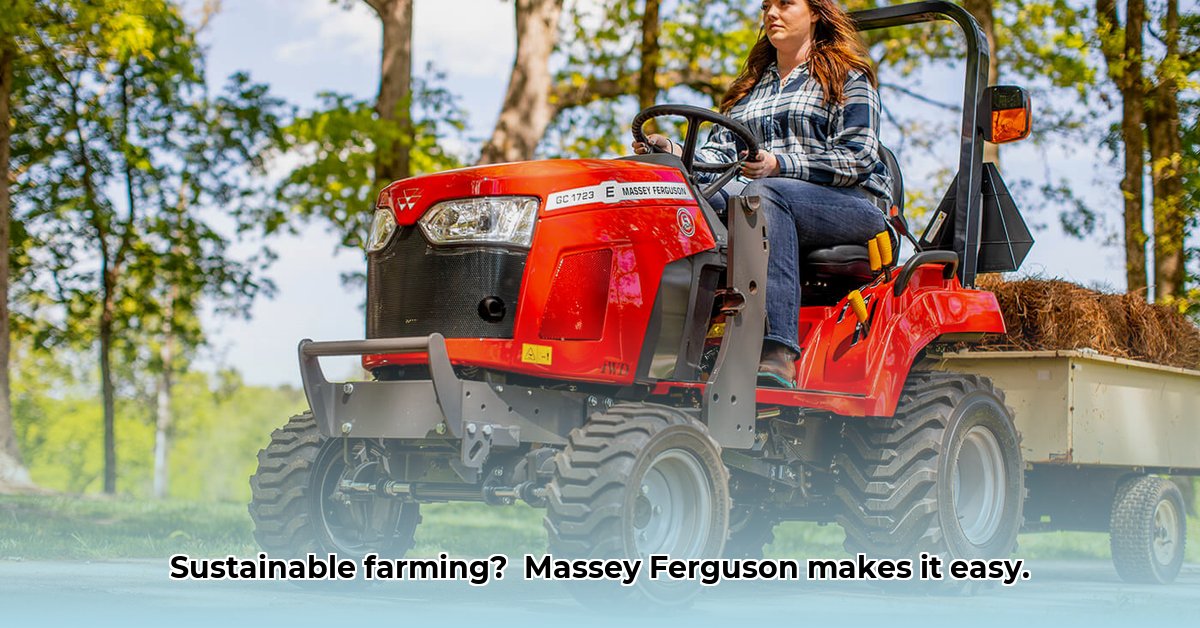
Massey Ferguson Small Tractors: A Deep Dive into Sustainability
Massey Ferguson, a long-standing name in agriculture, is making strides in the compact tractor market with a renewed focus on sustainability. This article provides a detailed analysis of their small tractor lineup, exploring their features, performance, and environmental impact. We examine how their design and functionality contribute to sustainable farming practices and compare them to competitors, ultimately assessing their suitability for environmentally conscious farmers. Are these tractors truly a partner in sustainable farming? Let's find out. For more information on specific Massey Ferguson models, check out this helpful resource.
Powering Sustainable Practices: Engine Technology and Fuel Efficiency
Massey Ferguson promotes improved engine technology in its latest small tractors, promising enhanced fuel efficiency. However, concrete data on fuel savings and emissions remains scarce in their marketing materials. While the manufacturer claims improvements, a lack of independently verified quantitative data hinders a complete assessment of their environmental impact. This absence of transparency leaves crucial questions unanswered: How much fuel is actually saved compared to previous models or competitors? What are the precise emission levels? The release of comprehensive, independently verified data would significantly bolster their sustainability claims. A more transparent approach is needed to fully evaluate their contribution to environmentally responsible farming.
Transmission and Hydraulic Systems: Efficiency in Action
Efficient transmission and hydraulic systems are crucial for fuel economy. Massey Ferguson highlights the design of these components for optimal efficiency, emphasizing their contribution to reduced fuel consumption. However, without specific data to quantify improvements in fuel efficiency compared to previous models and competitors, their claims require further substantiation. The question remains: How significant are these fuel savings in real-world farming scenarios? Detailed benchmarks and independent testing data are critical to fully support these claims.
Adaptability and Sustainable Farming Practices: Implements and Their Impact
The versatility of Massey Ferguson small tractors is a key selling point. The wide range of compatible implements makes them adaptable for various sustainable farming practices. The potential for reduced resource usage and minimized environmental impact is significant. But, again, detailed data is necessary to substantiate these claims. For example: How does fuel consumption for tilling compare to previous models or competitors? Does the precision of planting equipment translate to tangible increases in yield and reduced seed waste? Independent verification of claims regarding reduced chemical usage through precise spraying and enhanced harvesting efficiency are crucial for transparent evaluation.
| Implement Type | Potential Sustainability Benefits | Required Data for Verification |
|---|---|---|
| Soil Tillage Tools | Reduced fuel consumption per acre, improved soil health | Fuel usage comparisons, soil health analysis (pre & post tillage) |
| Planting Equipment | Precise seed spacing, minimized seed waste | Seed usage rates, crop germination rates, yield data |
| Spraying & Fertilizing | Targeted application, reduced chemical inputs | Chemical usage data, weed control effectiveness, yield data |
| Harvesting Equipment | Efficient harvesting, minimized crop damage and waste | Harvesting speed, crop yield, amount of crop damage, post-harvest waste |
User Experience and Farmer-Centric Design: Comfort and Productivity
Massey Ferguson emphasizes a farmer-centric design philosophy that prioritizes operator comfort and intuitive controls. While ease of use is a key benefit, user testimonials and detailed feedback are vital to validate these claims. Detailed user reviews, videos showcasing machine operation, and assessments of ergonomic design are crucial for a balanced assessment. How does the user experience impact productivity and overall satisfaction? Real-world data is essential to fully understand the connection between design and practical farm outcomes.
Competitive Landscape: A Comparative Analysis
A comprehensive evaluation requires a comparison with competing brands such as John Deere and Kubota. While horsepower and features are often readily available, a detailed comparison focusing on verifiable sustainability metrics like fuel efficiency, emissions, and overall environmental impact is lacking. Such a comparative analysis would highlight areas where Massey Ferguson excels and areas needing improvement. Understanding their relative strengths and weaknesses within the sustainable farming market is critical for consumers making informed decisions.
Conclusion: Towards a Sustainable Future
While Massey Ferguson's small tractors show promise in terms of usability and potential for sustainable farming, the lack of detailed, independently verified sustainability data remains a significant barrier to a definitive assessment. The company’s claims require thorough substantiation through independent testing and transparent data release. Future advancements, such as hybrid or electric technologies, would significantly enhance their sustainability profile. Clearer information on fuel efficiency, emissions, and lifecycle assessments is critical for farmers to evaluate the tractors' true contribution to environmentally responsible agriculture. Until then, a complete picture of their sustainability remains incomplete.